Medium-specific painting
Oil, watercolor, ink, pastel, charcoal, illustration, and woodblock prompts use distinct surface language—impasto, transparent wash, dry line, or powdery softness—not one generic filter.
Generate art nouveau illustrations — flowing lines, ornamental borders, and decorative floral motifs in the tradition of Alphonse Mucha. Free, no signup.
Generate the same person, pet, or character across unlimited images — without losing the face. Then turn it into a 4-second video.
Oil, watercolor, ink, pastel, charcoal, illustration, and woodblock prompts use distinct surface language—impasto, transparent wash, dry line, or powdery softness—not one generic filter.
Start from text or an uploaded image without creating an account, entering a card, or buying a credit pack. The painter runs directly in your browser.
The painter redraws the subject rather than applying a pixel-preserving filter. Brushwork can feel physical, but identity, small details, and composition may drift.
New paintings download as PNG files with no FreePainter watermark. Choose from six canvas shapes and upscale later when a large print needs more pixels.
The studio prohibits explicit sexual content, sexualized minors, non-consensual deepfakes, hate, and targeted harassment. Uploaded images must follow the same rules.
The free service allows 5 image generations per IP address each hour. Automated use and attempts to bypass the limit are prohibited.
Enter a figure, botanical subject, or decorative scene. Female figures, flowers, and nature themes suit the style particularly well.
Art nouveau linework, decorative panel framing, and Mucha-style color palette are silently applied. No style keywords needed.
Download the result with no watermark. Works for posters, prints, and decorative projects. No account required.
Compare finished results with the prompts behind them, then bring one back here as your starting point.
Explore the collection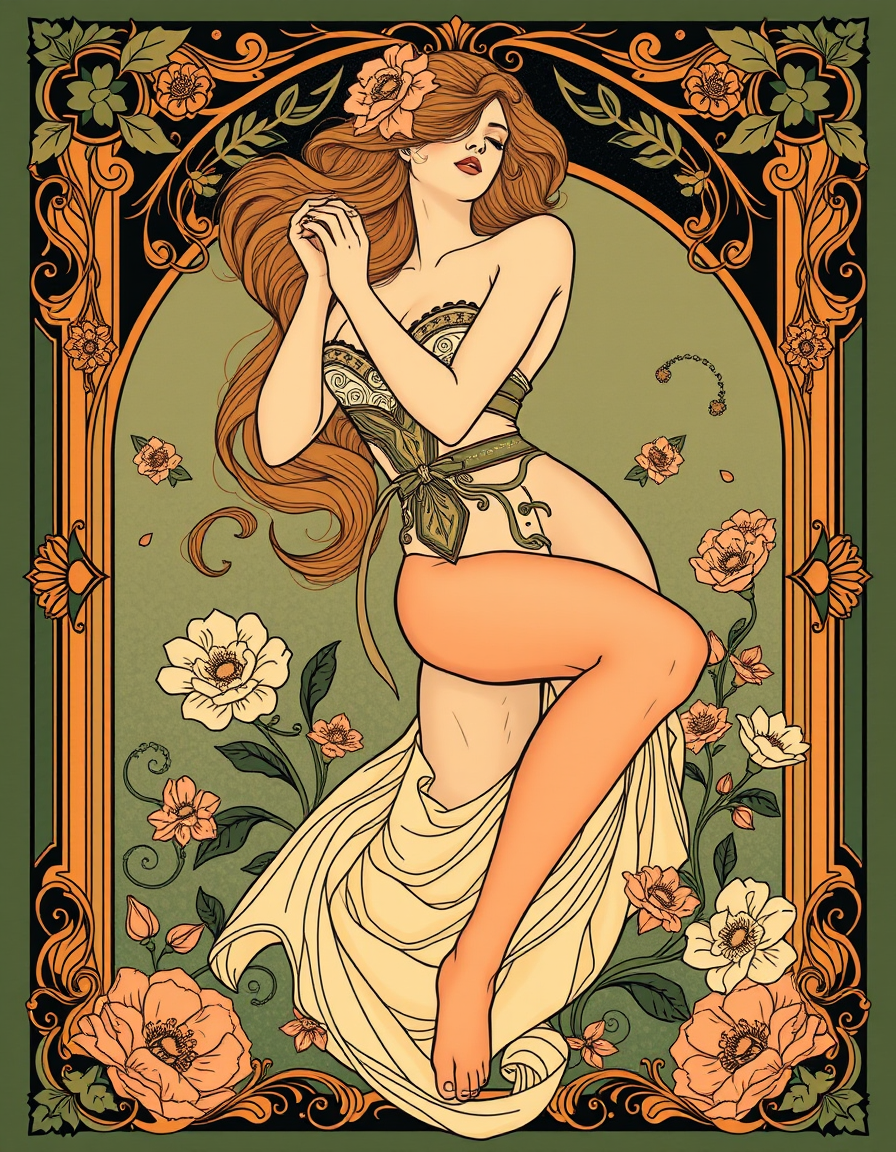
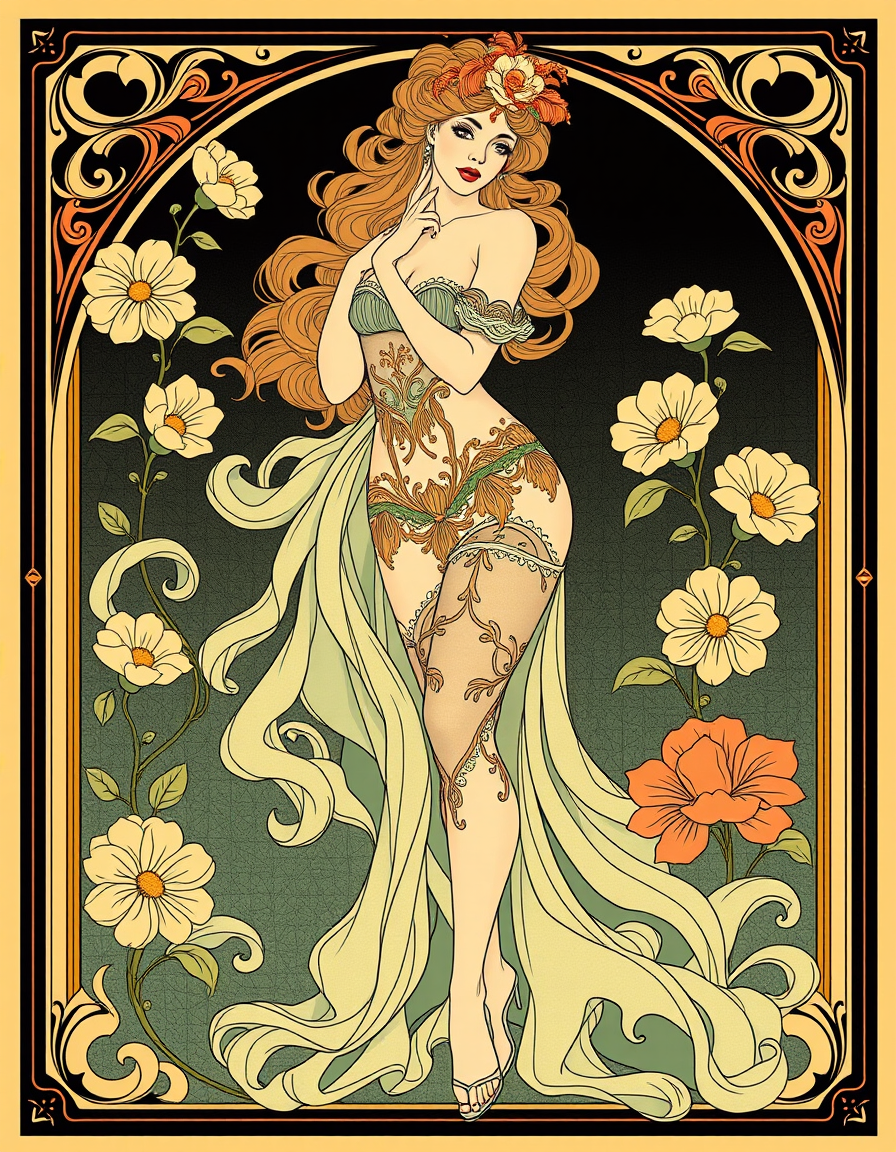
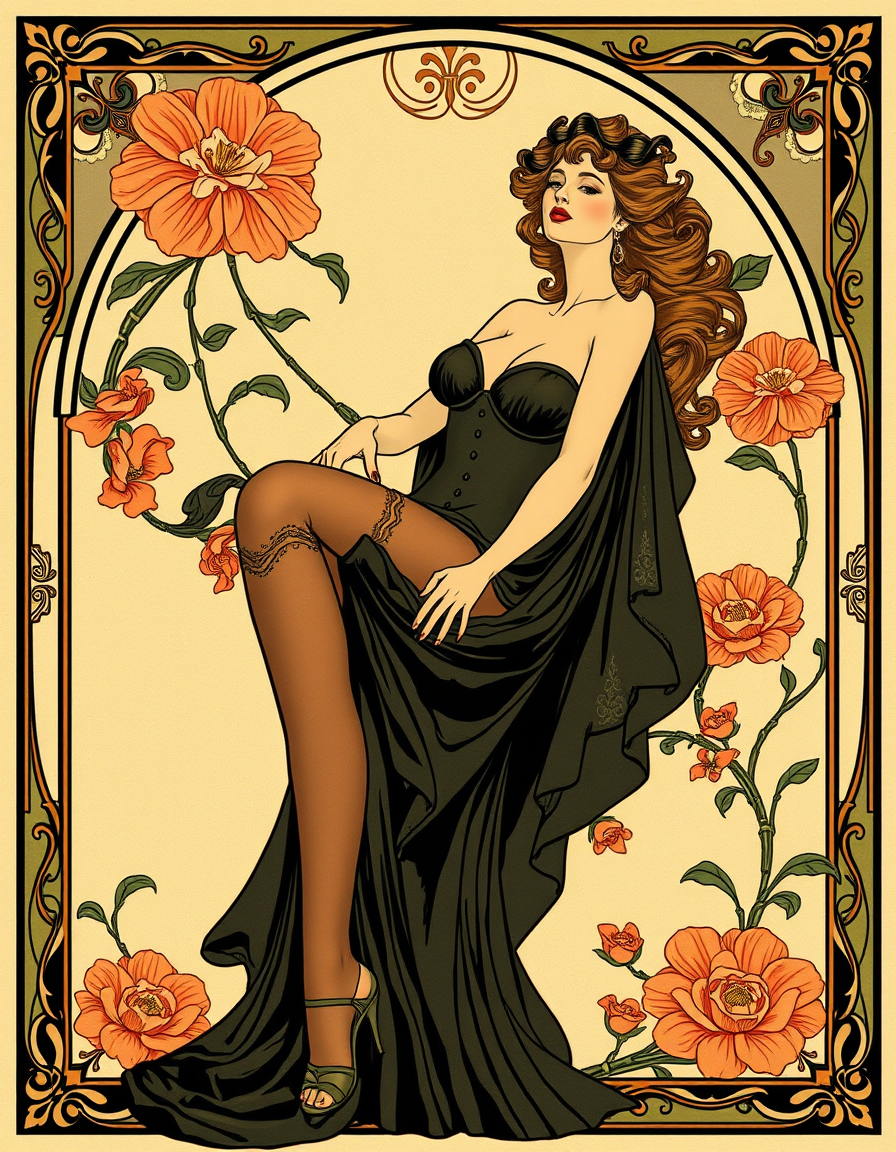
Art nouveau was an international decorative arts movement that flourished between roughly 1890 and 1910, emerging as a self-conscious reaction against the historicism of nineteenth-century design. Where Victorian design reached backward to Gothic, Renaissance, or classical sources, art nouveau looked to nature — specifically, to the organic forms of plants, insects, and flowing water — as the generative source for a new visual vocabulary. The movement's central conviction was that there should be no hierarchy between fine art and applied art: a poster, a chair, a jewelry clasp, and a painting should all aspire to the same standard of design.
Alphonse Mucha is the name most associated with the movement's visual ideal. His poster work for the actress Sarah Bernhardt — beginning with the famous Gismonda poster of 1894 — defined the art nouveau figure: a central female form in flowing robes, surrounded by ornamental borders of stylized flowers, framed by an architectural panel that echoes Byzantine mosaic. The colors are warm golds, soft mauves, and dusty roses. The line is sinuous but precise, following the curve of a body or vine with equal fluency. Mucha understood that the poster was a street medium — seen at a glance, held in peripheral vision — and designed accordingly: bold silhouettes, centralized composition, faces that hold attention from a distance.
Beyond Mucha, the movement produced Gustav Klimt's gilded surface patterns, Antoni Gaudí's architectural organicism, Louis Comfort Tiffany's stained-glass landscapes, and Émile Gallé's cameo glass with botanical motifs. The common thread is nature observed closely enough to become abstract — the exact curve of a dragonfly wing, the specific way a water lily petal overlaps the stem — and then used as a decorative element with the same rigor that classical architects used the column.
Art nouveau is exceptionally well-suited to AI generation because its vocabulary is precise and distinctive: specific line quality, a recognizable palette, and a set of compositional conventions — the ornamental panel, the botanical border, the central female figure — that transfer reliably across subjects.
It turns a short description into artwork in the Art Nouveau style — flowing lines, botanical motifs, and ornamental borders in the spirit of Mucha and Klimt.
Name a subject and a mood, like 'a woman with flowing hair among irises' or 'a peacock framed by stylized vines.' The Art Nouveau styling is applied for you.
It is completely free with no signup and no credit card. Open the page and start generating right away.
FreePainter permits personal and experimental use only and does not grant a commercial license. It makes no ownership claim, but you are responsible for third-party rights and local copyright law.
New paintings download as watermark-free PNG in six sizes: 1:1 1024×1024, 4:3 1152×896, 3:2 1152×768, 16:9 1344×768, 9:16 768×1344, and 4:5 896×1152. Upscale before making a large print.